One message across every channel: what Azerbaijan brands can learn from T-Mobile's campaign
- Home
- blog details
One message across every channel: what Azerbaijan brands can learn from T-Mobile's campaign
- Marketinq xəbərləri
- Media planlama
- İnteqrə olunmuş kampaniya
- TV reklamı
- Radio reklamı
- Çöl reklamı
- Brend strategiyası
In brief: a large campaign is held together not by a celebrity, but by one recognisable customer problem and a product proof that remain consistent across channels. T-Mobile's T-Mix campaign, announced on 5 November 2026, expands from a 60-second hero film into national broadcast, streaming, cinema, digital, social, radio and out-of-home media. The lesson for Azerbaijani brands is not to divide budget across as many channels as possible; it is to give each channel a clear role in reinforcing the same strategic idea.
What stands out in the campaign structure?
T-Mobile introduces its T-Mix plan through the problem of people paying their phone bills on autopilot. The creative idea of Bryan Cranston waking up the audience links entertainment to a behavioural tension: customers may keep paying for bundled benefits they do not use, while the new plan promises more choice and the ability to change selected benefits.
According to the official announcement, the 60-second spot debuts during Thursday Night Football and then runs across national broadcast, streaming, cinema, digital, social, radio and out-of-home. Separate Spanish-language content featuring Lele Pons is also planned. This is more than translation; it is an attempt to express one campaign idea in a different cultural context.
The strength: a direct link between product and creative idea
The wake-up metaphor connects the campaign's entertaining scenes with the reason to reconsider the product. The audience is not only given a famous face to remember; it is given a clear reason to question the current plan. Celebrity attention can be useful, but it cannot replace a product argument.
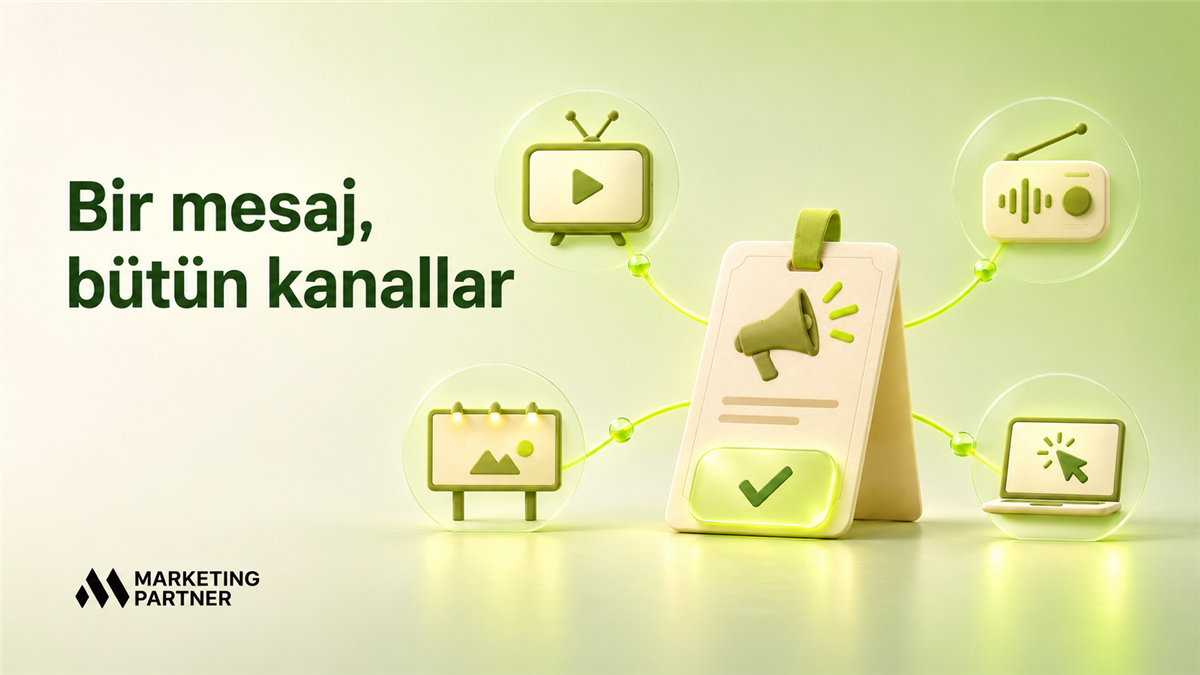
The media roles are also distinct. Broadcast and cinema carry the large story, radio can repeat the wake-up call through sound, outdoor keeps a short message visible in daily journeys, while social and digital formats can explain choices and move people toward action. An integrated campaign is not simply the same film cut into multiple lengths.
Critical view: production scale is not proof of effectiveness
The press release does not disclose the media budget, frequency, allocation or commercial results. It is therefore not possible to infer sales effectiveness from production scale. Celebrity, directing talent and broad distribution may win attention, but plan comprehension, price comparison and switching friction still need to be measured.
Another risk is treating celebrity as strategy. In a smaller market, a known personality can easily become the entire idea. People may remember the person while forgetting the brand, offer and next action. In an effective campaign, the celebrity carries the message; the message does not depend on fame to make sense.
A practical Azerbaijan application
Hypothetical local scenario: an Azerbaijani telecom company launches a customisable family plan under the idea “Do not pay for what you do not use.” A TV film shows different needs within one family. Radio uses a short dialogue to repeat the problem. Outdoor keeps only the core benefit and one CTA. Digital advertising leads to a landing page where users configure a plan around their needs.
This is not a claim about an existing local campaign. It demonstrates how an integrated media idea could work in Azerbaijan. The same structure can support bank cards, insurance packages, retail subscriptions or automotive services where customer choice is the main benefit.
Six-step integrated campaign plan
Choose one behavioural problem: do not communicate every product feature at once. Identify the habit that should change or the friction the offer removes.
Write one strategic sentence: it should connect the TV script, radio copy, billboard and digital CTA.
Assign a role to every channel: broadcast creates story and scale, radio builds sonic frequency, outdoor maintains visibility, and digital explains, compares and converts.
Separate localisation from translation: language, humour, talent, usage scenarios and CTA should fit the audience's context.
Prepare the sales path: the website, contact centre, branches and sales team must explain the same offer when the campaign creates demand.
Build measurement before launch: establish baselines for branded search, direct traffic, calls, leads, plan changes and sales.
What should measurement include?
reach, frequency and video completion by channel;
changes in branded search and direct traffic;
offer-page visits, configurator usage and enquiries;
campaign-related contact-centre questions;
new sales, plan changes and cost per qualified lead;
where possible, matched-market or time-based test-and-control analysis.
Marketers should avoid assigning all impact to the final click. TV, radio and outdoor may create the search or direct visit, while the final conversion is recorded digitally. That is why media planning and buying should be evaluated together with digital analytics and sales data.
Marketing Partner's perspective
We plan integrated campaigns as a system in which one message works across different touchpoints. A TV advertising idea needs story and context; radio needs sonic memory; outdoor needs a message readable in seconds; digital needs a measurable next step.
Our recommendation is to test the strategic message in four simple mock-ups before committing to a large production: one TV frame, one radio script, one billboard and one mobile ad. If the same idea remains clear across all four, the campaign is ready to scale. If only the celebrity or visual effects work, the strategic foundation is still weak.
Main source: T-Mobile Newsroom — “Sorry to Wake You, But T-Mobile and Bryan Cranston Have a Change in Plans”, 5 November 2026. The source describes the creative and channel rollout but does not report budget, frequency or sales results. The Azerbaijan example in this article is a hypothetical Marketing Partner application scenario.